



ARCC Projects
Augmentative and Alternative Communication Connecting School and Home (AAC Connect)
Project Overview: This project is to learn about how AAC (Augmentative and Alternative Communication) devices are being used. First we will gather information. We will learn how these devices are being used. And we will create a map of social groups. Based on this, we will come up with ways to support this use. These methods will be tested to see if they can support the use of AAC devices.
Communication Learning and AAC for Student Success (CLASS)
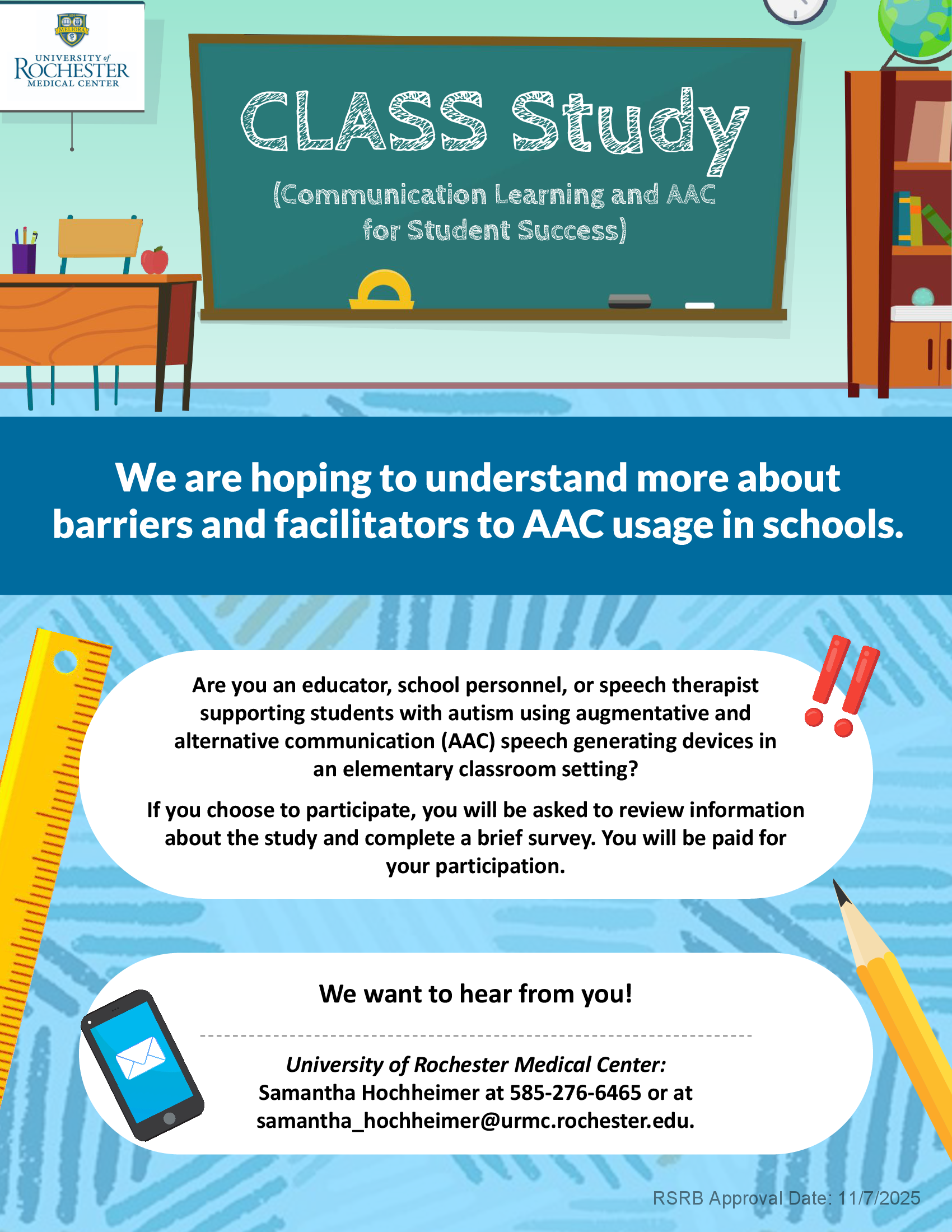
Project Overview: This project is intended to support more widespread AAC (Augmentative and Alternative Communication) device usage in elementary school classrooms. We will work with schools to gather information on how these devices are currently being used. Then we will use what we learn to partner with teachers and develop strategies to support more widespread usage of AAC devices in classrooms.
Rapid Analysis of Natural Teen Talk (RANTT)
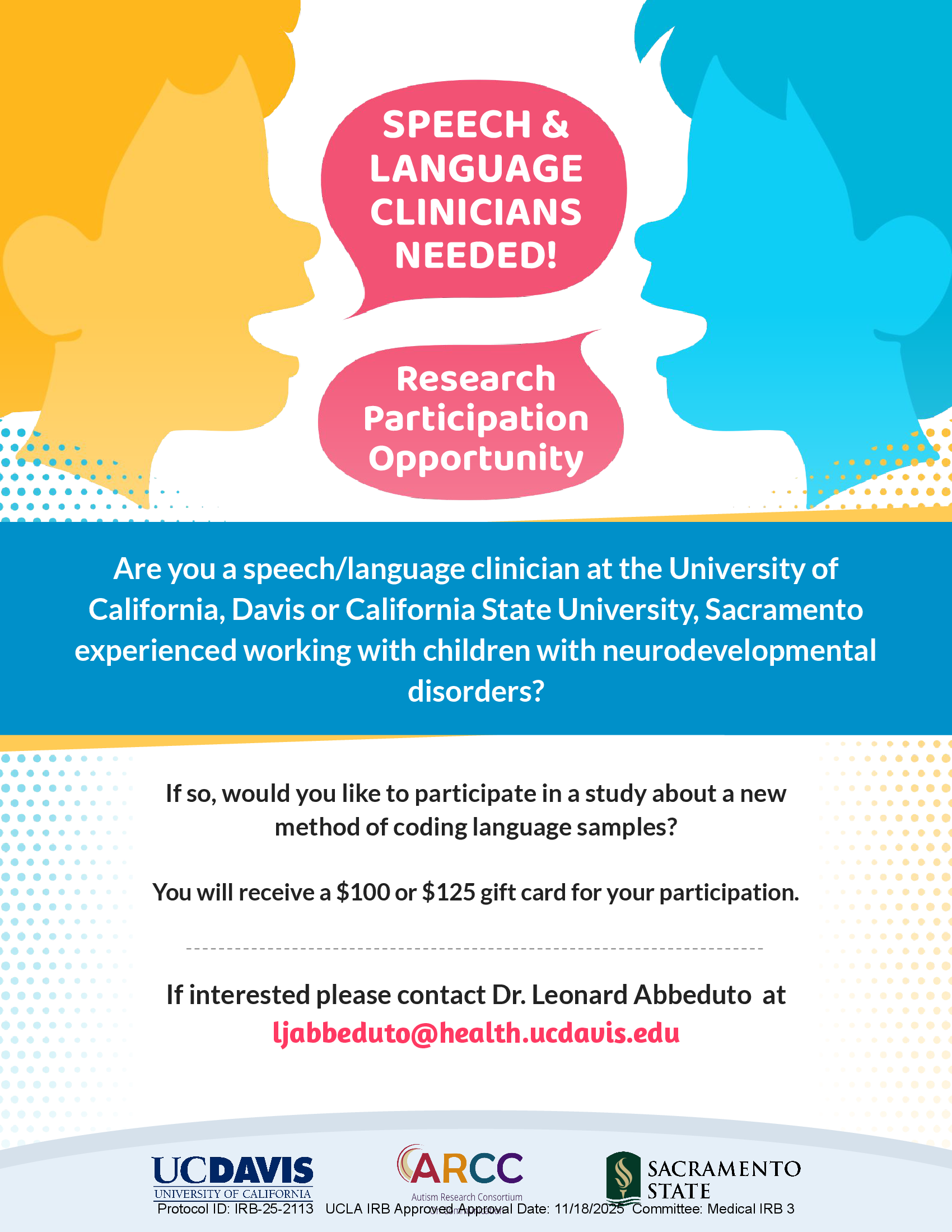
Project Overview: This project will create and test a faster, easier, and less expensive way to analyze how adolescents and young adults with intellectual and developmental disabilities (IDD) use language. Traditional tests don’t give enough useful information, and while natural language sampling (NLS) offers better insights, it takes a lot of time and training to transcribe and analyze. The goal is to design a simpler method that keeps the benefits of NLS but removes the need for slow, manual transcription.
Reactions and Strategies of Parents Observing NeuroDivergent Speech (RESPOND)

RESPOND will use existing video data from previous autism research projects conducted in Los Angeles (UCLA) and the University of North Carolina.
Project Overview: This project studies how parents respond when their autistic children use repetitive or unusual speech sounds or phrases. By re-examining recorded parent–child interactions over time, researchers will look for patterns between children’s speech and parents’ reactions. The goal is to understand whether certain types of parental responses help support later language growth, and to highlight repetitive speech as a potential strength rather than a behavior to eliminate.
Publications
-
Chang Y-C, Shih W, Kasari C. Predictors of Play Development at Home After Parent-Mediated Early Intervention for Autistic Preschool Children. Behavioral Sciences. 2026; 16(3):387. https://doi.org/10.3390/bs16030387
Panganiban, J., Shih, W., Levato, L., Shire, S., Kasari, C., & the AIM–ASD Team. (2025). Meaningful determinants of early response: Predicting and characterizing behavioral changes for minimally verbal autistic children. Autism Research, 1–9. https://doi.org/10.1002/aur.70123
FAQs
-
The Autism Research Consortium on Communication (ARCC) brings together researchers to study how to help autistic children enhance their communication and language skills.
The goals of the grant are to:Create ways to encourage and support the use of AAC devices.
Share results with both scientists and the public.
Train new researchers and build partnerships for future studies.
-
ARCC supports several main projects, such as:
Working with the community and schools to find ways of encouraging non-speaking children with ASD to use AAC devices.
To support new scientists, ARCC offers:
Free training webinars.
Mentorship meetings with experienced researchers.
Support to attend conferences and share their own research.